
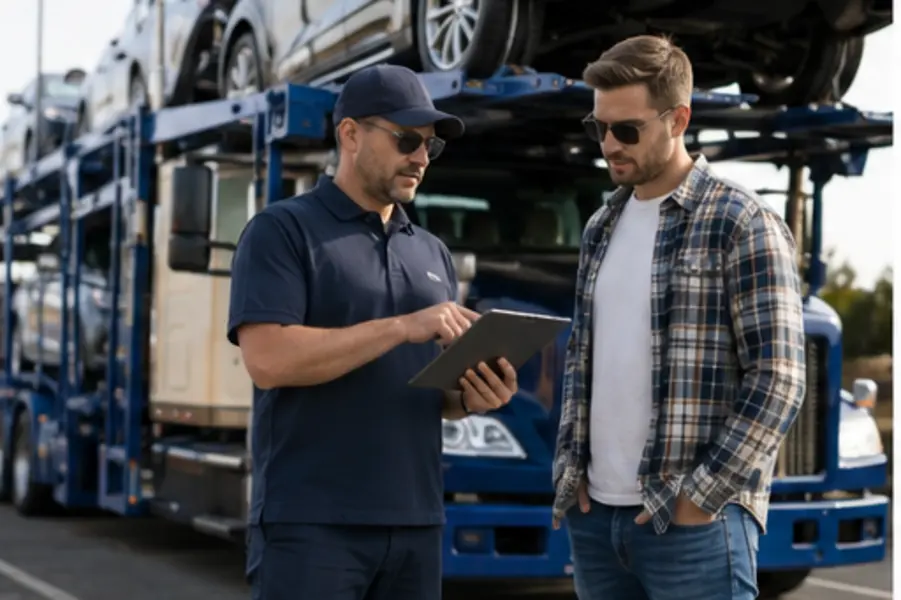
How Car Shipping Works
Understand each step before your vehicle moves—from providing accurate details to signing the delivery inspection.
From shipping request to vehicle delivery
Car shipping is a coordinated service between the customer, a transport broker or coordinator and the motor carrier that physically moves the vehicle. The customer provides accurate shipment information, the shipment is matched with suitable equipment, and the driver performs the pickup and delivery inspections.
The first available pickup date is not always the exact pickup date. Standard service commonly uses a window because carrier routes change as vehicles are added, delivered and affected by weather or traffic. A narrower commitment generally requires more carrier flexibility and may affect cost.
Communication is easiest when the pickup and delivery contacts are available, the addresses can accommodate a large truck and the vehicle is ready before the driver arrives.
- Provide exact pickup and delivery ZIP codes
- Disclose the vehicle’s size, condition and modifications
- Review pickup expectations before carrier dispatch
- Keep a copy of the pickup and delivery condition report

Built around the actual shipment
A professional plan connects the requested service with the vehicle, route, access and timing details carriers use.
Accurate order details
Correct addresses, phone numbers, vehicle condition and dimensions reduce dispatch problems.
Documented inspections
Pickup and delivery condition reports create a shared record of the vehicle’s visible condition.
Realistic scheduling
A clear first-available date and contact plan help the carrier build a workable route.
Safer handoffs
Meeting in a legal, accessible area gives the driver room to load and unload correctly.
How the vehicle moves from request to delivery
The shipment becomes easier to manage when every handoff has an owner and every important detail is documented.
Request a quote
Share complete route, vehicle, condition and timing information.
Review the plan
Confirm service type, pickup expectations, contacts and order terms.
Inspect at pickup
Remove loose items, photograph the vehicle and sign the condition report.
Inspect at delivery
Compare the vehicle with the pickup record before signing the final document.
What can change the shipping estimate?
Two vehicles traveling between the same states can require different carrier space, loading equipment and route time. A useful quote reflects the shipment’s real requirements.
- How much flexibility exists around pickup
- Whether the addresses are near active carrier lanes
- The trailer and loading equipment required
- Seasonal, weather and traffic conditions
Prepare for a clean pickup inspection
Wash the exterior enough to make existing marks visible, photograph the vehicle in good light and remove loose accessories. Leave only a small amount of fuel, disable alarms and provide instructions for unusual starting or suspension systems.
Personal belongings are not the same as vehicle cargo and may fall outside the motor carrier’s coverage. Ask about the carrier’s policy before placing anything in the vehicle. Do not obstruct windows, add unsafe weight or leave valuables.
The driver and pickup contact should record visible condition on the bill of lading. Repeat the process at delivery before signing. For consumer guidance and carrier verification resources, visit the Federal Motor Carrier Safety Administration.
Pickup checklist
- Vehicle starts, rolls, steers and brakes as disclosed
- Keys and authorized pickup contact are ready
- Loose racks, toll tags and personal valuables are removed
- Photos show all sides, wheels, glass and existing marks
- Safe truck access or a nearby meeting point is identified

How Car Shipping Works: process, pricing and preparation
This original guide covers the questions customers should answer before a vehicle is assigned to a carrier.
Key takeaways for How Car Shipping Works
Shipping process works best when the request starts with accurate locations, a complete vehicle description and a realistic first-available pickup date. Those details determine which part of broker, carrier and customer coordination is relevant and whether a carrier can build the shipment into an existing route. A useful plan explains what is known, what remains an estimate and which choices may change timing or price. It should never depend on vague nationwide averages when the actual shipment has clear, measurable requirements.
The practical objective is clear responsibilities at every stage. Customers should know the transport method, the expected pickup process, the people who will be available at both ends and the documents used to record vehicle condition. Flexibility can improve carrier options, but important deadlines should be disclosed before dispatch. The best time to resolve questions is before a driver accepts the shipment, not while the carrier is approaching the pickup location.
How How Car Shipping Works works
The process begins with route, vehicle and timing information. ABC reviews those details against broker, carrier and customer coordination and discusses whether documented pickup and delivery inspections fits the shipment. Once an appropriate motor carrier is coordinated, the pickup contact receives the carrier information and prepares a safe handoff. The driver confirms the vehicle, records visible condition and secures it using the equipment designed for the trailer and vehicle type.
During transit, delivery estimates may change because a multi-vehicle carrier completes several scheduled stops and must follow safety rules, traffic restrictions and legal driving-hour limits. At delivery, the receiving contact compares the vehicle with the pickup record before signing. This sequence—accurate order, suitable equipment, documented pickup, responsible transit and documented delivery—creates a clear chain of custody without pretending that every road condition can be predicted in advance.
How much does how car shipping works cost?
Pricing is shipment-specific. Distance is important, but carriers also consider the vehicle’s length, height, weight and operating condition; the amount of trailer space available; the popularity of the lane; fuel and toll exposure; the pickup window; and access at both ends. safe truck-accessible handoff points can create very different operating requirements, even when two requests appear similar on a state-to-state map.
For a meaningful comparison, every quote should use the same origin, destination, vehicle, condition, first-available date and equipment type. A low preliminary number may not represent a dispatchable shipment if important facts are missing. Customers can improve estimate quality by using exact ZIP codes, identifying modifications and explaining whether the vehicle starts, rolls, steers and brakes. See the car shipping cost guide for a complete breakdown.
What affects pickup and delivery timing?
Pickup timing depends on where the vehicle enters broker, carrier and customer coordination, how frequently carriers serve the area and how much flexibility exists around the first available date. A major corridor may support frequent equipment, while a remote detour can require additional miles without another vehicle to offset the trip. Weekends, holidays, severe weather, major events and seasonal relocation patterns can also change carrier availability.
Transit time starts after the vehicle is loaded, not when a quote is requested. Mileage, scheduled stops, traffic, weather, inspections and required rest periods all influence delivery. A window is usually more responsible than a single promised hour. Customers with flights, lease expirations or reporting dates should explain those constraints early and maintain a backup plan for local transportation until the vehicle has been physically delivered.
Choosing open, enclosed or specialized equipment
Most operable everyday vehicles move efficiently on open carriers. Enclosed equipment adds protection from outside exposure and may provide lift-gate loading or other features appropriate for low-clearance, collectible or high-value vehicles. Inoperable vehicles require compatible winch or loading capability, and motorcycles need motorcycle-safe securement. The right choice follows the vehicle’s actual condition and the owner’s protection priorities.
Equipment choice also affects availability and cost. Documented pickup and delivery inspections may serve a smaller carrier market than standard open transport. Customers should disclose lowered suspension, oversized tires, roof accessories, long wheelbases, aftermarket bodywork and fluid leaks. Accurate disclosure allows the carrier to evaluate loading angles, deck position, weight distribution and securement before arriving, reducing the chance of a failed pickup.
Preparing the vehicle before pickup
Wash the exterior enough to make existing marks visible and photograph every side, the roof, wheels, glass and interior before the driver arrives. Remove loose accessories, toll tags, valuables and items that could shift. Keep the fuel level low—commonly about one quarter tank—while leaving enough for loading and unloading. Disable alarms and provide instructions for unusual starting, suspension or battery systems.
The vehicle should be presented in the same condition described in the order. If it becomes inoperable, develops a leak or receives a modification, update the shipment before pickup. Personal property is not the same as vehicle cargo and may not be covered by the motor carrier’s cargo policy. Ask what is permitted, keep visibility clear and avoid adding unsafe weight. Review the full car shipping process before the pickup day.
Pickup access and meeting-point planning
Auto carriers are large commercial vehicles. Low branches, tight turns, narrow streets, weight restrictions, parked cars, gates and local rules can prevent direct residential access. For this service, access may involve safe truck-accessible handoff points. Door-to-door service therefore means as close to each requested address as the carrier can safely and legally operate, not a promise to stop at a specific driveway regardless of conditions.
A wide commercial street, shopping-center perimeter or other legal open area may be a better handoff point. The driver and contact should agree on the location before arrival rather than blocking traffic or attempting a dangerous maneuver. The pickup contact should carry the keys, have authority to release the vehicle and remain reachable. The delivery contact needs the same preparation so the final inspection is not rushed.
The pickup inspection and bill of lading
Before loading, the driver and pickup contact walk around the vehicle and record visible condition on the bill of lading or electronic inspection. Good lighting matters. Existing scratches, dents, wheel marks, glass damage and loose parts should be documented, and both parties should retain access to the record. Independent timestamped photographs add useful context and should show the entire vehicle as well as close views.
The inspection is not a substitute for reading the shipment documents. Confirm the vehicle identity, pickup and delivery contacts, payment instructions and carrier information. Do not sign a blank or incomplete condition report. At delivery, repeat the walkaround before signing the final document. If there is a new concern, note it clearly on the delivery record and follow the carrier’s claim instructions promptly.
Communication during transport
Clear communication begins before dispatch. The coordinator needs accurate phone numbers and should know if a dealership, auction, apartment office or third party controls access. After pickup, the driver is the best source for operational updates because the driver knows the current route, completed stops and roadway conditions. The customer should keep calls concise and avoid distracting the driver while the truck is moving.
Estimated arrival times can narrow as the carrier approaches, but they remain subject to traffic, weather and earlier deliveries. If a contact will be unavailable, authorize another responsible adult and share that person’s information in advance. A documented change is safer than an informal last-minute arrangement. Good communication supports clear responsibilities at every stage and helps every party understand the next action.
Carrier verification and responsible expectations
The physical transportation is performed by a motor carrier. Customers should receive carrier information before pickup and can review public operating-status resources maintained by the Federal Motor Carrier Safety Administration. Insurance has limits, exclusions and procedures; it is not a blanket promise that every personal item or pre-existing mechanical condition is covered. Ask questions before loading and keep copies of the order and inspection.
Responsible planning avoids guaranteed claims that depend on traffic, weather or third parties. It also avoids fabricated ratings, shipment counts or business-history statements. ABC focuses on the shipment facts supplied by the customer, the equipment under consideration and the documented handoffs. For independent consumer resources, visit the FMCSA consumer protection information.
Common planning mistakes to avoid
Common problems include using incomplete ZIP codes, listing the wrong vehicle trim, failing to disclose an inoperable condition, choosing a pickup location that cannot fit a carrier and treating the first available date as a guaranteed appointment. Another mistake is comparing quotes that use different trailer types or payment assumptions. A valid comparison requires equivalent shipment details and clear written terms.
Do not pack valuables or obstruct the windows, and do not wait until pickup to mention a deadline or modification. Keep the vehicle accessible, confirm the release procedure with a dealer or auction and have a backup contact. If the shipment changes, update it immediately. Small corrections made early can prevent a carrier from driving to a location with the wrong equipment or an unavailable vehicle.
Planning your next step
first-time shippers and experienced vehicle owners can begin by gathering the year, make, model, exact origin and destination, operating condition and first available date. Add any deadline, access restriction or equipment preference. Those facts allow the request to be evaluated within broker, carrier and customer coordination and support a practical discussion of pickup expectations, carrier availability and pricing.
Use the car shipping quote form to request a shipment-specific estimate, compare open transport with enclosed auto transport, or call (818) 732-1805. The goal is a documented plan that fits the vehicle and route rather than a one-size-fits-all promise.
Related auto transport services and guides
Use these pages to compare equipment, understand cost and prepare the route.
How Car Shipping Works FAQ
Concise answers to common planning questions. Shipment-specific answers depend on the actual route, vehicle and carrier.
Who actually transports my vehicle?
What is a bill of lading?
Do I need to be present?
How much fuel should be in the tank?
Can pickup or delivery dates change?
How do I verify a carrier?
Ready to plan your vehicle shipment?
Provide the exact route, vehicle and first available pickup date for a personalized open or enclosed transport estimate.